
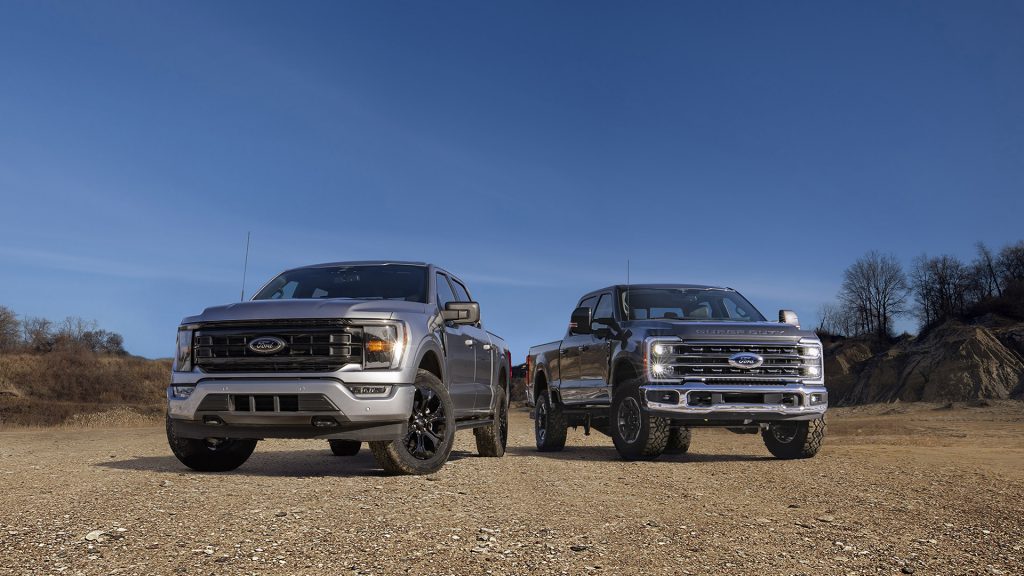
When shoppers ask us which Fords have aluminum bodies, they’re usually surprised to learn that several of Ford’s most popular trucks and SUVs have made this transition over the past decade. At Jim Burke Ford in Bakersfield, we’ve seen firsthand how aluminum body construction has transformed the truck market, delivering lighter, stronger, and more capable vehicles without sacrificing the durability Ford owners expect.
Ford’s decision to adopt aluminum represented more than two decades of research and testing before the first aluminum-bodied F-150 rolled off the production line in 2015. Here’s exactly which Ford vehicles feature aluminum bodies, when this transition happened, and what it means for you as a truck buyer in the Central Valley.
Ford’s Aluminum Body Innovation: A Transformation in Truck Engineering
Ford completely shook up the automotive industry when it introduced military-grade aluminum alloy body construction to its flagship F-150. This wasn’t just about chasing fuel economy standards. Ford invested heavily in developing high-strength aluminum alloys that could match or exceed the toughness of traditional steel while cutting significant weight from the vehicle.
The results? Pretty impressive. Ford’s aluminum body trucks proved their durability through rigorous real-world testing, including the punishing conditions of the Baja 1000 off-road race. The engineering breakthrough reduced body weight by roughly 15% on the F-150 without compromising structural integrity. That weight savings translated directly into better fuel efficiency, quicker acceleration, sharper handling, and increased towing and payload capacities.
What made Ford’s approach particularly bold was applying this technology to its best-selling vehicle. The F-150 had dominated truck sales for decades, and switching from steel to aluminum represented a calculated risk that ultimately paid off. Aluminum body construction gradually became recognized as a legitimate advancement rather than an experimental gamble.
Which Ford Models Feature Aluminum Bodies
Understanding which Fords have aluminum bodies requires distinguishing between full aluminum body construction and vehicles that use aluminum selectively. Here’s exactly which models made the complete transition and which use a mixed-material approach.
Ford F-150 (2015-Present)
The F-150 became the first full-size pickup with aluminum body panels when the 2015 model year launched. Every body panel except the firewall uses aluminum construction, while the frame remains high-strength steel. This distinction matters because many buyers mistakenly believe the entire truck is aluminum, including the frame.
The switch resulted in up to 700 pounds of weight reduction compared to the previous steel-bodied generation. That substantial weight savings improved the power-to-weight ratio, allowing the F-150 to accelerate more quickly, handle more nimbly, and consume less fuel. Ford proved that aluminum body construction could deliver the toughness truck owners demand while providing tangible performance benefits.
Today’s aluminum-bodied F-150s continue to dominate sales charts, with millions of miles of real-world use validating the design. Whether you’re exploring our new Ford truck inventory or considering a used F-150, you’re looking at vehicles that benefit from this proven technology.
Ford Super Duty Trucks (2017-Present)
Ford extended aluminum body construction to its heavy-duty truck lineup when the 2017 Super Duty models debuted. The F-250, F-350, and F-450 all received aluminum bodies and beds, making Ford the first manufacturer to bring this technology to the heavy-duty segment.
Super Duty trucks shed up to 350 pounds through aluminum body construction while maintaining the extreme strength these workhorses require. Ford paired the aluminum bodies with high-strength steel frames that are up to 24 times stiffer than previous generations. This combination delivers the structural rigidity needed for maximum towing and payload capabilities while reducing overall vehicle weight.
The weight savings on Super Duty trucks directly increases how much you can tow and haul. By reducing the truck’s own weight, Ford freed up capacity that translates into higher payload ratings and improved towing performance. For commercial operators and serious truck users in Bakersfield, this means getting more work done without stepping up to a larger vehicle.
Other Ford Vehicles with Aluminum Bodies
Beyond the F-150 and Super Duty, Ford has incorporated aluminum body construction into additional vehicles. The Ford Expedition and Lincoln Navigator received full aluminum body construction starting with their 2018 redesigns. These full-size SUVs benefit from up to 300 pounds of weight savings, improving fuel efficiency and performance without sacrificing interior space or capability.
The Ford Raptor, which shares the F-150 platform, features aluminum body construction as part of its performance-focused design. The weight reduction exceeds 500 pounds compared to a steel-bodied equivalent, contributing to the Raptor’s impressive off-road agility and acceleration.
Mixed-Material Vehicles: Not Full Aluminum
Not all Ford trucks use full aluminum bodies. The Ford Ranger incorporates aluminum selectively, using it for the hood, front fenders on some model years, and tailgate. The body structure remains traditional materials. Similarly, the Ford Maverick uses high-strength steel for its body panels, with aluminum limited to the hood and select components.
When Ford Introduced Aluminum Body Construction
Ford’s aluminum body journey began officially with the 2015 F-150, though development stretched back over 20 years. The company invested heavily in understanding how to manufacture, repair, and ensure the longevity of aluminum body vehicles before committing to production.
The timeline progressed methodically. After proving the concept with the F-150 in 2015, Ford expanded aluminum bodies to the Super Duty trucks in 2017. The Expedition and Navigator followed with the 2018 model year. This staged rollout allowed Ford to refine manufacturing processes and train dealership technicians on proper repair techniques.
When people ask what year Ford started using aluminum bodies, the answer depends on the specific model. The F-150 pioneered the technology in 2015, making any F-150 from that model year forward an aluminum-bodied truck. Super Duty buyers looking for aluminum bodies need 2017 or newer models, while Expedition and Navigator shoppers should focus on 2018 and later.
Why Ford Chose Aluminum Over Traditional Steel
Weight Reduction and Improved Fuel Efficiency
The primary driver behind Ford’s aluminum body adoption was weight reduction and its cascading benefits. Aluminum offers an excellent strength-to-weight ratio, allowing engineers to design body panels that match steel’s structural performance while weighing significantly less.
When Ford cut up to 700 pounds from the F-150’s body weight, the fuel economy gains were immediately apparent. Lighter trucks require less energy to accelerate, maintain highway speeds, and climb grades. For daily drivers and commercial operators alike, those efficiency gains add up to real savings over the vehicle’s lifetime.
Weight reduction also improves overall performance. Lighter trucks accelerate more quickly, handle more responsively, and stop in shorter distances. The improved power-to-weight ratio means engines don’t work as hard to move the vehicle, which can extend engine longevity and reduce wear on drivetrain components.
Enhanced Towing and Payload Capacity
Weight savings from aluminum body construction translate directly into increased towing and payload capacity. Manufacturers must certify vehicles to specific Gross Vehicle Weight Ratings, which represent the maximum allowable weight of the vehicle, passengers, cargo, and trailer tongue weight combined.
When Ford reduced the F-150’s weight by 700 pounds, that freed up 700 pounds of additional capacity within the same GVWR. For Super Duty trucks where maximum capability matters most, the 350-pound weight reduction provided meaningful increases in working capacity.
This advantage matters particularly for buyers who regularly operate near their truck’s maximum ratings. The aluminum body construction provides a built-in capacity buffer that steel-bodied competitors can’t match at equivalent vehicle sizes.
Superior Corrosion Resistance and Longevity
Aluminum offers natural corrosion resistance that steel simply cannot match. When exposed to oxygen, aluminum forms a protective aluminum oxide layer on its surface. This oxidation layer prevents further corrosion from penetrating deeper into the material, unlike the red rust that eats through steel over time.
For truck owners in the Central Valley and throughout California, this corrosion resistance translates into longer-lasting vehicles. You won’t see the rust bubbling and paint failure that commonly affects steel-bodied trucks, especially where moisture regularly contacts the body.
The aluminum used in Ford trucks is military-grade alloy specifically engineered for strength and durability. These aren’t soft, easily damaged panels. The aluminum body construction matches or exceeds the impact resistance of steel while providing inherent protection against the corrosion that shortens vehicle lifespans.
What Aluminum Body Construction Means for Ford Owners
Repair Considerations
The most common question we hear concerns repairs. Aluminum requires different repair techniques than steel, and not all body shops have the proper equipment and training to work with it. Ford addressed this concern by certifying repair facilities and training technicians specifically for aluminum body repair. Modern insurance networks include certified aluminum repair shops, and the modular design of aluminum body panels often makes replacement more practical than extensive repair work.
Frame vs. Body Construction
Ford trucks use aluminum body panels mounted to high-strength steel frames. The frame provides the structural foundation and mounting points for suspension, drivetrain, and towing components. This hybrid approach combines aluminum’s weight-saving benefits with steel’s proven strength where it matters most for structural integrity.
Corrosion Protection
Do Ford trucks rust with aluminum bodies? The aluminum components won’t develop red rust like steel, though the steel frame and undercarriage components require the same corrosion protection as any truck. The aluminum body’s corrosion resistance means the visible exterior maintains its appearance far longer than traditional steel bodies, particularly in harsh climates.
Frequently Asked Questions About Ford Aluminum Bodies
Which Ford trucks have aluminum bodies?
The F-150 (2015-present), Super Duty trucks including F-250, F-350, and F-450 (2017-present), and the Raptor all feature aluminum body construction. The Expedition and Navigator SUVs also use aluminum bodies starting with 2018 models.
Is the F-150 frame aluminum?
No. The F-150 uses aluminum body panels with a high-strength steel frame. The frame provides the structural foundation, while aluminum reduces body weight. This combination delivers both strength and efficiency.
Did aluminum hurt Ford truck durability?
No. Ford’s military-grade aluminum alloys match or exceed steel strength while providing superior corrosion resistance. Real-world testing, including the Baja 1000, proved aluminum body trucks can withstand extreme conditions without compromising durability.
Why did Ford choose aluminum over steel?
Ford adopted aluminum for its superior strength-to-weight ratio, which reduces vehicle weight, improves fuel efficiency, increases towing and payload capacity, and provides natural corrosion resistance. The technology delivers measurable performance benefits without sacrificing the toughness truck owners demand.
Explore Ford’s Aluminum Body Trucks at Jim Burke Ford
At Jim Burke Ford, we’ve helped hundreds of Bakersfield customers experience the benefits of aluminum body technology firsthand. Our team knows the differences between model years, can explain which vehicles feature full aluminum construction versus mixed materials, and can show you how these trucks perform in real-world conditions.
Whether you’re interested in a new F-150 with the latest aluminum body refinements or considering a used Super Duty from 2017 or later, we’re here to answer your questions. Visit us to see Ford’s aluminum body trucks in person, or contact our Ford experts to learn more about how aluminum body construction benefits your specific needs.


